
How do you feed tropical fish properly, especially in a community tank with many different species? The trick is to think in layers: some fish eat at the surface (like guppy fish), some in the middle (almost all tetra fish) and some on the ground (corydoras and loaches for example). In this guide, I show you how I feed my community tanks, which snacks my fish love (and which they ignore), and what I do when I'm on vacation.
Prefer to watch? My short feeding guide is in the video below.
Know where your fish eat
A community tank usually has fish that feed at different levels of the water:
- Surface feeders: guppies, Endler's livebearers, swordtails and platies
- Mid-water feeders: ember tetras, yellow phantom tetras and dwarf cichliods in my tanks for example
- Bottom dwellers: Corydoras, and also shrimp like Amano shrimp
If you only feed flakes, the surface feeders eat almost everything before it sinks. The fish further down end up hungry and might even starve.
My three-food method for community tanks
- Flakes as the base: I use pond flakes, but any flake food works. You can grind them a little so even the smallest fish (and juvenile shrimps as well as fish fry) get a piece.
- Granules or powdered food: they sink to the middle of the water column for the mid-water feeders.
- Tabs or pellets: they sink to the ground for the bottom dwellers.
The trick: add all three foods at the same time. That way, the surface feeders are busy at the top while the mid-level hunters – younger guppies, ember tetras and yellow phantom tetras – eat in the middle layer, and the bottom dwellers get their share on the ground. Everyone is happy and healthy.
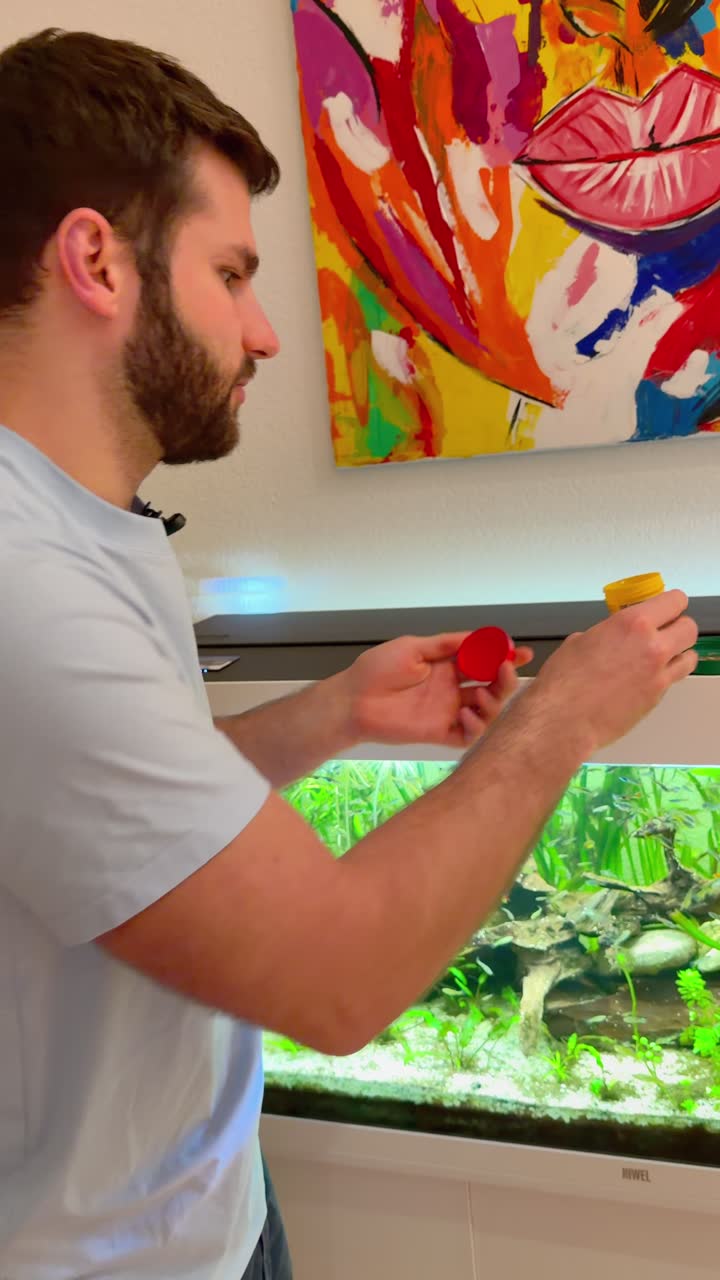
Flakes, granules and tabs: one food for each layer of the tank, added at the same time.
Which snacks do fish like? My test
I gave my fish five very different snacks to see what they like:
- Potato: meh – only mild interest
- Banana: they loved it, a total surprise
- Fresh salmon: instant chaos, they really went crazy for raw salmon
- Bloodworms: pure frenzy – the clear winner
- Carrot: ignored, like a vegetable at a kid's party
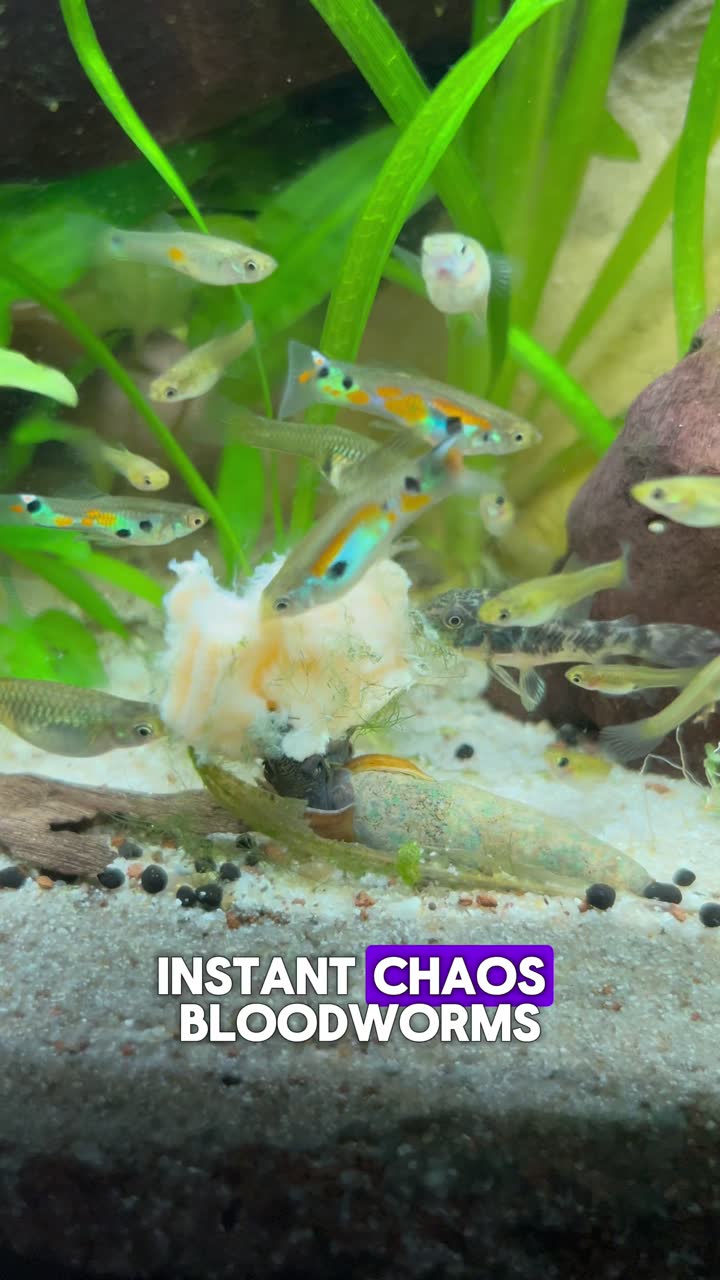
Bloodworms were the clear winner of my snack test.
Vegetables on a stick
Vegetables are a great occasional snack. I put a slice of cucumber on a chopstick and stuck it into the substrate. After about two minutes, the first guppy found it and started eating. After an hour, the cucumber was stormed by guppies and catfish.
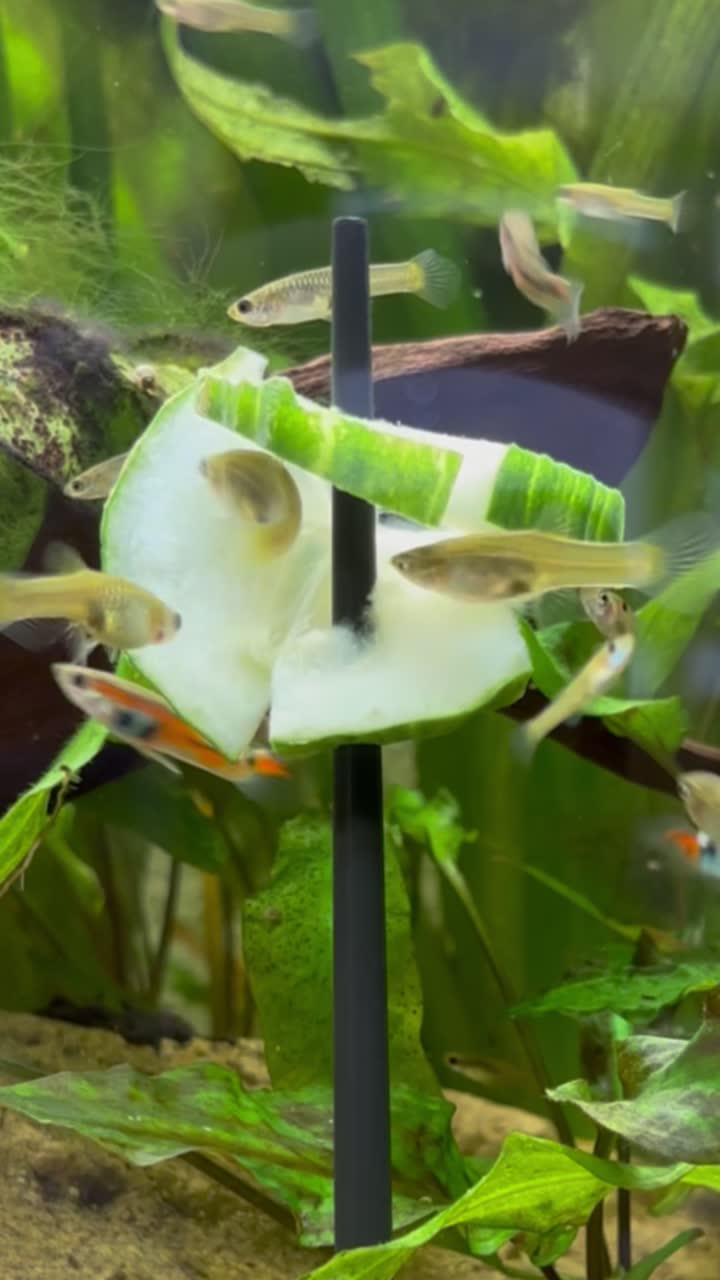
A cucumber slice on a chopstick: easy to place and easy to remove again.
Live food: the best treat
Live food like daphnia triggers natural hunting behavior. Even dead daphnia and shed shells are a welcome snack for tetras, shrimp and snails. Instead of buying expensive bags every time, you can start your own culture. Watch my guide:
A varied diet keeps fish healthy
Most community fish are omnivores. My platies, for example, get a mix of flakes and pellets every day, sometimes supplemented with live or frozen food, and they also graze on algae and biofilm. Read more in my Platy Fish Care Guide.
Feeding while you're on vacation
For trips, I use automatic fish feeders. Some of them, like the JUWEL SmartFeed 2.0, also let you feed only every second or third day – great for fish that don't need daily feeding, or to avoid overfeeding. Compare them here: Automatic Fish Feeders Compared.
Feeding checklist
- Know which fish eat at the surface, in the middle and on the ground
- Feed flakes, granules and tabs at the same time, if you have different feeding habits in 1 tank
- Grind flakes for very small fish and fry
- Offer live food and vegetables as occasional treats
- Use an automatic feeder for vacations
FAQ
How do I make sure bottom dwellers get food?
Add sinking tabs or pellets at the same time as the flakes, so the surface feeders are busy while the food reaches the ground.
What can I feed tropical fish besides flakes?
Granules, pellets, live food like daphnia, frozen food like bloodworms, and vegetables like cucumber. In my test, my fish also loved banana.
What can I do about very small fish not getting food?
Grind the flakes a little, so even the smallest fish get a piece.