
Live food like daphnia (water fleas) is easy to find in fish stores, but it is expensive: I pay 4 euros for a small bag (in a German fish store) which is enough for ca. 1 feeding. So why not turn one bag into a free, almost infinite source of live fish food? In this guide, I show you how I started my own daphnia culture, step by step.
You prefer to watch? The full experiment is in the video below, over 265000 aquarists already watched it (as of Nov 2026):
Why daphnia are such great fish food
Daphnia are tiny crustaceans that most fish love. Even dead daphnia and their shed shells are a welcome snack: when I fed the leftovers, my yellow phantom tetras go into a feeding frenzy, and amano shrimp and assassin snails (clea helena) enjoy them too.
Step 1: Avoid a temperature shock
I bought Daphnia pulex at my local fish store. These bags are usually stored cold, at around 4–5 °C, to keep the culture fresh as long as possible. Since daphnia are living creatures, avoid a sudden temperature jump when you move them. Give the bag a good shake so no daphnia stay behind.
Step 2: Acclimate them with tank water
Pour the daphnia with their transport water into a small glass. Then add a little cycled tank water – not all at once. Wait about ten minutes, then fill up the glass. It's just like acclimating new fish.
Why tank water and not tap water? Water from an established (planted) tank is already cycled, contains no chlorine or heavy metals (which would kill the daphnia) and is full of microorganisms.
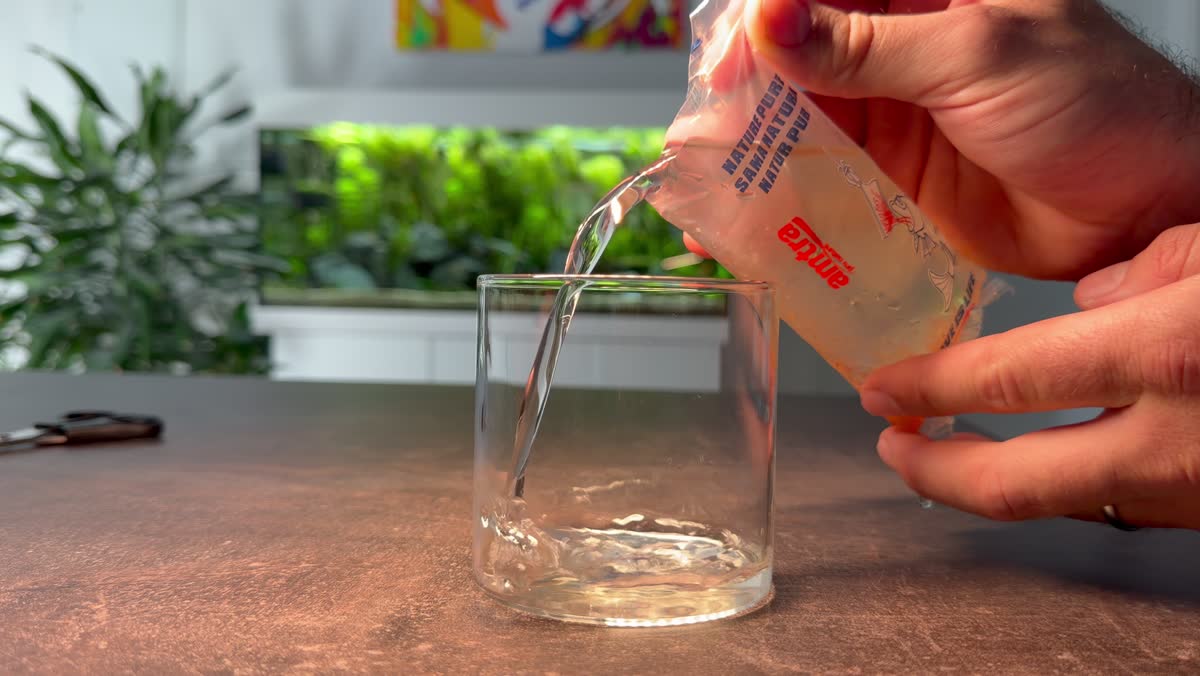
Pouring the store-bought daphnia into a glass. Then I slowly add cycled tank water.
Step 3: Leave the dead ones behind
At the bottom of the glass, you will notice a layer of empty exoskeletons and dead daphnia corpses. You don't want those in your fresh setup, because they rot and foul the water.
The trick: healthy daphnia constantly swim upwards. Pour slowly from the top layer, where the active ones are, and leave the dead ones and shells at the bottom. Whatever stays behind makes perfect fish food.
Another tip from one comment on youtube: Add ramshorn snails or bladder snails to your daphnia breeding colony. I have never tested this myself but could imagine it to work quite well. These snails are omnivores and will easily clean off any leftover food or dead daphnia.
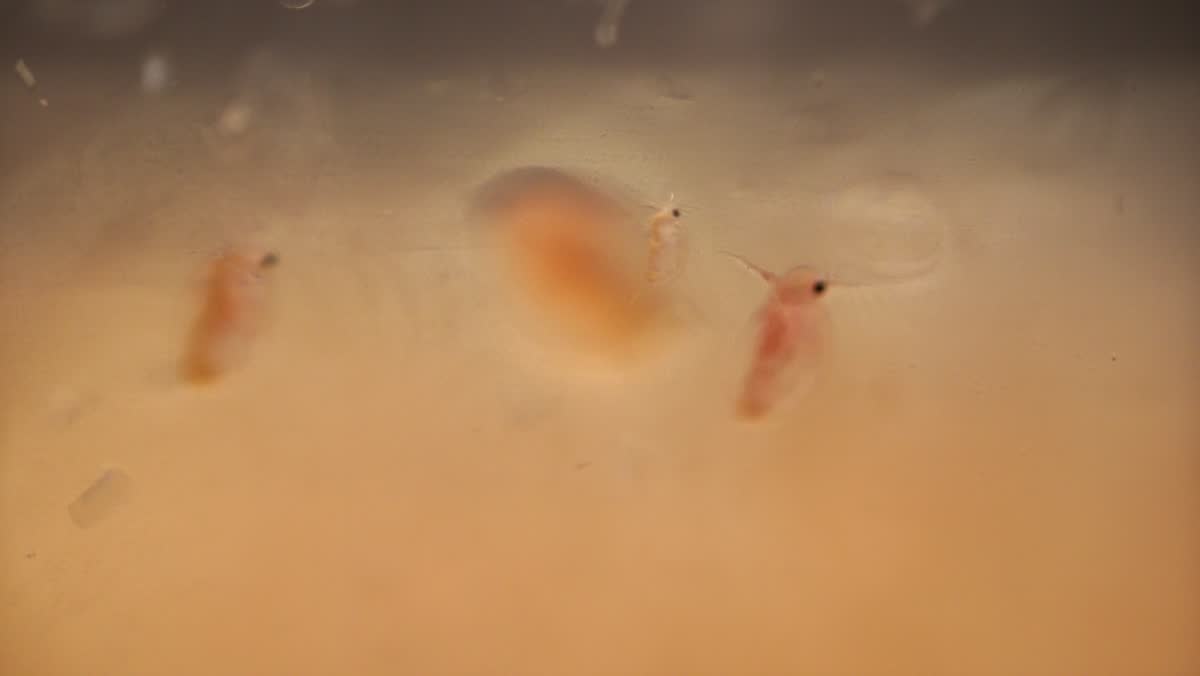
Close-up of daphnia: the healthy ones keep swimming upwards, which makes separating them easy.
Step 4: Feed them spirulina
I feed my daphnia spirulina powder, the kind sold for human consumption. Use an extremely tiny amount. I mix it with a little tank water, add it with the handle end of a spoon and stir well, because it shouldn't clump.
Step 5: Give them more space
As the colony grows, move it to a bigger container. I doubled, even quadrupled the water volume using the exact same tank water I had acclimated them to, so the water parameters stayed the same and they weren't disturbed at all.
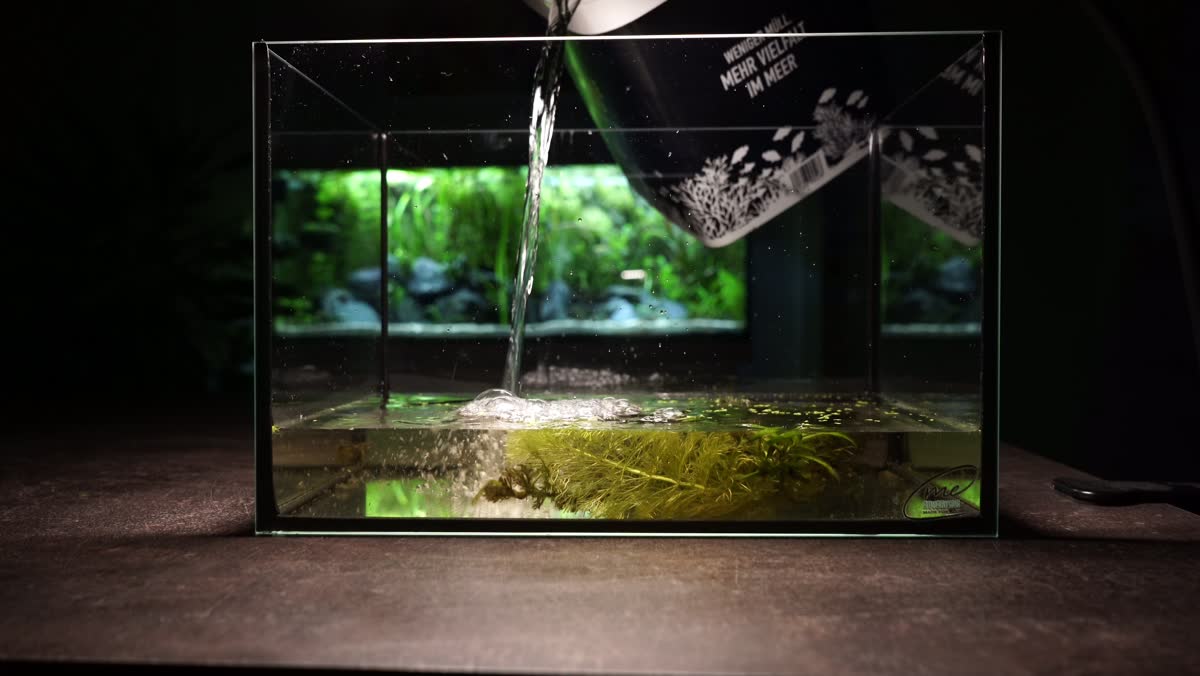
Moving the colony into a larger tank with the same tank water they were acclimated to.
Fascinating daphnia facts
- They swim towards light. Probably because light means algae growth in nature, one of their main food sources. You will see them gather on the brighter side of the container and if you use your phone light they will swim towards it.
- They reproduce insanely fast. Under good conditions, a water flea can reproduce after about eight days and lay around ten eggs every eight days.
- No males needed. Females reproduce on their own via parthenogenesis. In perfect conditions, 100 daphnia could become around 1,000 within a week.
Should you add an air stone?
Opinions in forums are mixed: Some aquarists say an air stone makes a lot of sense, others say it harms the daphnia. I'd love to hear your experience – let me know in the comments of the video.
Quick checklist
- Avoid temperature shocks when bringing them home
- Acclimate slowly with cycled tank water, never chlorinated tap water
- Pour from the top layer and leave dead daphnia behind
- Feed a tiny amount of spirulina, stirred to avoid clumps
- Give the colony more space with the same water as it grows
FAQ
What do daphnia eat?
Algae. I feed a tiny amount of spirulina powder mixed with tank water.
Green water is also fine or even preferred.
Can I use tap water for a daphnia culture?
Untreated tap water contains chlorine, which kills daphnia. I use cycled water from an established aquarium.
How fast do daphnia multiply?
Under good conditions, they can reproduce after about eight days, and females don't need males to reproduce.
Watch the full video
See how the colony develops: Never Buy Live Fish Food Again! (Breeding Guide).